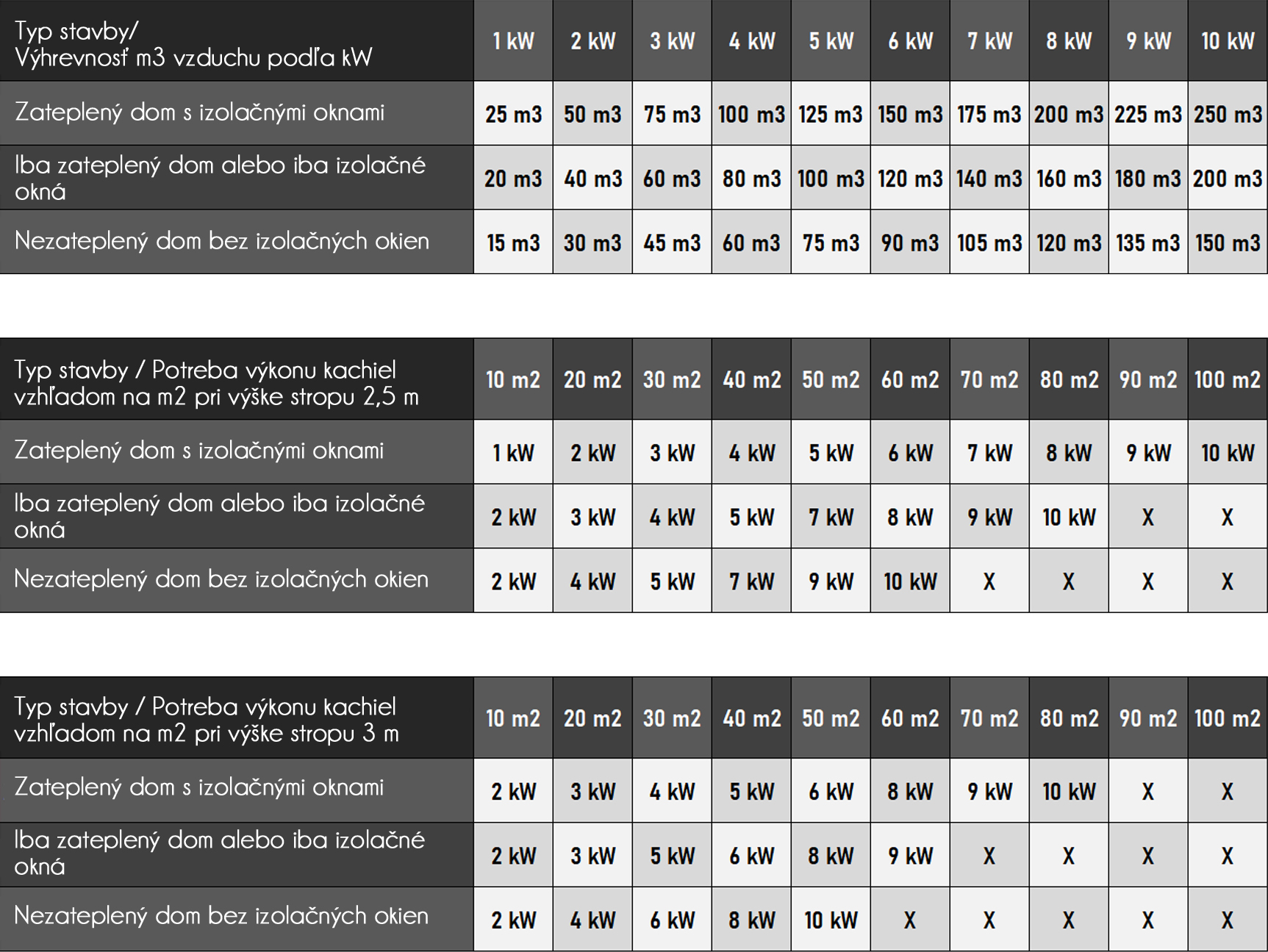
Before first use, the stove must be dried and burnt in with a gentle flame. All the materials the stove is made of need to be burnt in. The fireclay mortar, water glass, stove silicone and stove paint will smell slightly on the first day until they have burnt in.
Do not install the stove directly against a wall, as you will lose much of the radiant heat from the sides of the stove adjacent to the walls of the house. The ideal gap between the stove and the wall is 30 cm on each side.
Before the start of each heating season, clean the stove and check for cracks in the concrete. These cracks can appear when a stove that has not been dried out is fired up quickly, due to large differences in moisture and the resulting expansion and contraction of the materials.
Cracks can be repaired with a mixture of fireclay mortar and water glass. These two materials are used to prepare a compound (fireclay mortar), which is applied to the inside of the stove with a wide brush or by hand.
These stoves have a classic construction and, under operating conditions, will last between 8 and 200 years (like the stoves at Schönbrunn Palace in Vienna) – their service life depends on the relationship between the stove’s heat output and the volume of the space to be heated, the degree of insulation of the heated space and the correct construction of the chimney – a mismatch leads to overheating of the stove and, consequently, to its damage.
If you notice that the stove is overheating, contact the manufacturer immediately for advice on what to do. Repeated overheating can destroy the stove, and measures to prevent it can be agreed together with the manufacturer:
– replacing the stove with one with a higher heat output,
– other measures;
It is for these very reasons that this brochure aims to clarify several aspects of installing the stove, connecting it to the chimney and operating it.
We would like to inform you that this product has been assembled and installed using the latest technology in the field. The materials used are certified and guaranteed by CE manufacturers. The pre-assembled terracotta stoves have been tested in the factory test room and by other authorised laboratories. The connection to the chimney is very important, as the stove must have adequate draught. Another common problem is a lack of oxygen in insulated rooms with double-glazed windows and no ventilation system. We must bear in mind that fire consumes a lot of oxygen. Chimneys must be swept regularly by specialist companies.
I. INSTALLING THE STOVE
Place the stove where it is to be used, in a safe, stable and level position. Standard room chimneys with flue pipes with an internal diameter of 120 – 150 mm are used. When installing the stove, the flue pipes must be absolutely airtight to prevent a reduction in draught and the possibility of flue gases entering the room. At the connection points, the upper flue pipe must be fitted over the connecting spigot or the lower flue pipe.
The following regulations must be observed when connecting the stove to the chimney:
– the connection is made only to a masonry chimney with a flue matching the connecting spigot:
– the height of the masonry chimney must be at least 6 m;
– the length of the connecting pipes must be 1,5 – 2 m;
– horizontally mounted flue pipes must slope upwards towards the chimney by at least 10 – 15 degrees;
– make sure that any object around the stove is placed at least 50 cm from the firebox side of the stove and at least 30 cm from the other sides.
II. OPERATING MODE (USE)
When using the stove for the first time, light a moderate fire so that the fireclay lining dries out properly and is not damaged. Proceed as follows:
– Open the firebox door;
– Put approx. 0,2 kg of wood shavings into the stove and approx. 0,5 kg of wood on top;
– open the valve located next to the oven on the opposite side from the firebox by pulling the rod to ensure direct draught. The air regulator is set to the fully open position;
– light the fire and close all the doors on the stove;
– once the fire has caught, close the start-up damper; the hot gases will circulate around the oven.
From this point on, the stove is fuelled according to the desired use. As the stove is equipped with a grate, the ash must be removed before each use. A hotplate with two cooking rings is used for cooking.
When cooking, pots and pans can be placed on the cast-iron rings. Cover or uncover them with a lid depending on the intensity of the fire and the desired cooking speed. On the hotplate areas near the cast-iron rings, a high temperature (above the fire) or a fairly high cookware temperature can be maintained. The cooking or heating time depends on the material and wall thickness of the vessel. Use the oven of the cooking stove for baking and roasting. It is fitted with 2 side runners allowing a baking tray with food to be inserted at different levels of the oven depending on the type of dish. If you want to bake food, put it into an already hot oven. Store the wood you use in places protected from rain, wind, sun, snow, frost, excessive heat, etc., i.e. in enclosed spaces or cellars where these weather conditions cannot adversely affect the wood. Bring the amount of wood needed for one day’s use to the place of use.
III. STOVE MAINTENANCE
The ash pan is emptied 1x a day; clean the stove grate before each emptying. The flue pipes and gas circulation channels are cleaned regularly, and on this occasion the fireclay lining is checked and repaired if necessary; the stove frame is cleaned by sanding, the cooker plate is cleaned with stove polishing powder, and the enamelled and chrome parts are washed with a damp cloth and then wiped with a dry cloth. Avoid scratching and scuffing the ceramic and chrome parts, and do not clean them with objects that could damage the protective layer.
IV. IMPORTANT TO REMEMBER
If several heating or cooking appliances are connected to the same chimney, they must be connected at least 0,5 m apart. It is strictly forbidden to leave the house with the fire burning or to sleep while wood is still burning in the stove. Failure to follow the above instructions releases the manufacturer from any liability in the event of accidents. By following these instructions you will ensure flawless, long and economical operation of the stove. To avoid damage to the stove caused by improper use, the regulations on the rational use of the stove must be observed. Terracotta stoves are cleaned on the surface and, after cleaning, sealant is applied to the joints with a brush.
Using a stove clogged with soot is prohibited. When clogged, the stove gives off smoke. Likewise, with reduced draught the wood can no longer burn completely, which lowers the stove’s efficiency. At the same time, efficiency is reduced because soot, with its low thermal conductivity, prevents the stove walls from storing heat. In addition, soot deposits can cause fires.
V. SAFETY MEASURES AND FIRE PREVENTION
– Forced (chemical) ignition of wood is prohibited, as it leads to a large expansion of hot gases, which can cause the stove to explode;
– Lighting the fire with petrol is prohibited;
– Soot deposits in the stove promote fires; therefore soot build-up must be prevented as far as possible;
– Storing flammable materials (petrol, diesel, sawdust, bottles, etc.) near the stove is prohibited;
– flammable materials must be stored at least 400 mm from the back and sides of the stove and at least 800 mm from the front of the stove;
– The operating instructions must be followed; all responsibility lies with the user;
– The fire door must always be closed, as sparks may fly out when it is open;
– Do not leave children unattended while the fire is burning;
– While the stove is in operation, the air regulator rod, door handle and ash pan may only be handled with heat-resistant gloves;
– Do not use non-recommended fuels, including liquid fuels;
– Do not place objects made of flammable materials or objects that melt when heated on the stove;
– Do not use flammable liquids for lighting;
– Do not touch the outer surfaces of the stove during operation;
– Do not put large amounts of combustible material (more than recommended) into the firebox, to avoid damaging the stove’s firebox.
VI. CARE FOR THE ENVIRONMENT
RECOMMENDATIONS:
– Old stoves are to be handed over to specialised recycling facilities to protect the environment and recycle important raw materials;
– To keep combustion gas emissions within the limits permitted by national and European regulations, only fuels recommended by the manufacturer are to be used;
– Fuels must be stored in accordance with the instructions in this manual;
– The fuels used must be very well dried;
– The fire in the stove must not be left to smoulder;
– Do not overheat the stove and never load it with too much fuel;
– Do not use the stove to burn waste, as it is not permitted to use fuels with too much dust or fuels impregnated with toxic substances;
– Burning combustible waste is prohibited;
– The doors must be kept closed during use.
VII. IMPORTANT INSTRUCTIONS
– Before putting the stove into operation, the flue and chimney must be checked to ensure they are in good condition;
– when setting up terracotta stoves and positioning the flue, fire safety regulations are decisive;
– Terracotta stoves must not be fired with coke, as the fireclay and cast-iron parts wear out too quickly;
– The room where the stove is located must be well ventilated (beware of double windows and doors).